


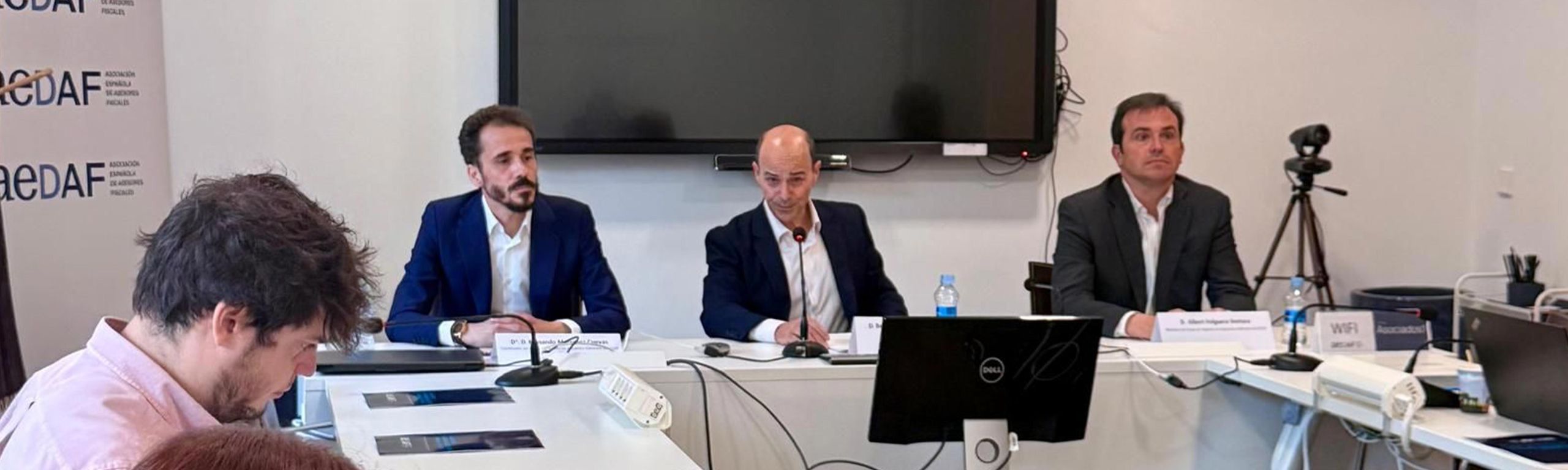
Albert Folguera, Partner in addwill‘s Tax Department and Coordinator of AEDAF’s Indirect Tax Experts Group, took part in the press conference organized by the Spanish Association of Tax Advisors (AEDAF) to present its analysis and proposed roadmap for the ViDA Directive and its impact on tax reporting systems and e-invoicing.
The proposal highlights the need to establish a coherent transition framework between the various existing systems, including SII, Veri*factu and the future EU-harmonized e-invoicing model—within the context of the VAT in the Digital Age (ViDA) initiative. The aim is to promote greater regulatory alignment and prevent businesses from facing operational disruptions and multiple rounds of system adaptation.
In this context, coordination between national and European regulations has become essential. While Veri*factu is being implemented, the European Union is simultaneously developing a common framework for the exchange of tax information that will be introduced over the coming years. This overlap could create uncertainty and complicated organizations’ technology planning.
During the AEDAF press conference, Albert Folguera focused on the practical implications this process may have for businesses, particularly the need to reduce administrative burdens and prevent taxpayers from having to repeatedly update their systems due to regulatory changes introduced at different times.
The debate highlights that the challenge is not purely technological; it is also about planning and regulatory alignment. How this transition is managed will be crucial to ensuring that tax digitalization delivers greater efficiency without creating unnecessary obstacles for businesses.
In this regard, cooperation between public authorities, professional associations and industry experts will be essential in building a more stable, predictable and efficient framework for managing tax obligations across Europe