



In Catalunya, marriage and de facto partnerships each have their own legal framework. The Civil Code of Catalunya uses the term stable partnership (parella estable) for what is commonly known as a de facto partnership.
How they are formed
Marriage. The process starts with a preliminary record or file, handled by a notary, a court clerk (letrado de la Administración de Justicia) or the Civil Registry officer. Then comes the ceremony, civil or religious with civil effects, which is registered with the Civil Registry. You need to be registered as a resident at the address where the file is processed, and you need two witnesses, both at the preliminary stage and at the ceremony (they can be different people each time). Registration is required for the marriage to take effect against third parties.
Stable partnership. A stable partnership is formed in one of three ways: by living together continuously for more than two years, by having a child together during the relationship, or by signing a public deed before a notary, with no preliminary file. Being registered as residents at the same address is preferable but not essential, and no witnesses are needed. Registering with the Catalan Registry of Stable Partnerships is voluntary and, for civil purposes, merely declaratory. Even so, it is decisive for qualifying for a widow’s pension and for many other benefits and administrative entitlements.
How they end
Marriage. A marriage ends on the death of one spouse, a declaration of death, or divorce. If both spouses agree and there are no minor children, the divorce can be done by public deed before a notary or by decree of the court clerk. If there are minor children, or the spouses don’t agree, it goes through the courts, with the Public Prosecutor’s Office involved.
Stable partnership. A stable partnership ends when the couple stops living together and their shared life breaks down, on the death or declaration of death of one partner, or when either partner marries. It also ends by mutual agreement formalized in a public deed, or when one partner formally notifies the other of their decision, in a way that leaves proof of delivery.
Financial effects of a breakup
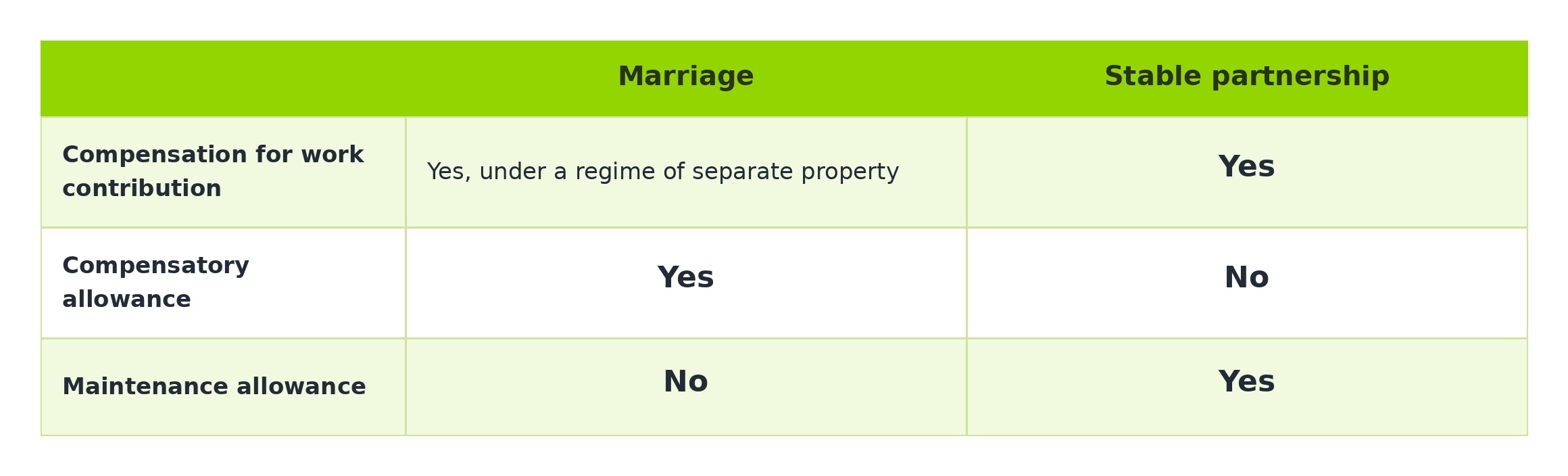
- Compensation for work contribution. The requirements are the same for both. One partner must have done substantially more work for the household than the other or worked for the other partner without pay or for inadequate pay, and the other partner must have ended up with a larger increase in assets as a result.
- Compensatory allowance. This goes to the spouse who is worse off financially because of the breakup, up to the standard of living the couple had during the marriage. There’s no need to show financial hardship: its purpose is to correct the economic imbalance.
- Maintenance allowance. This applies if living together has reduced the applicant’s ability to earn an income, or if they have custody of shared children in circumstances that limit their earning capacity.
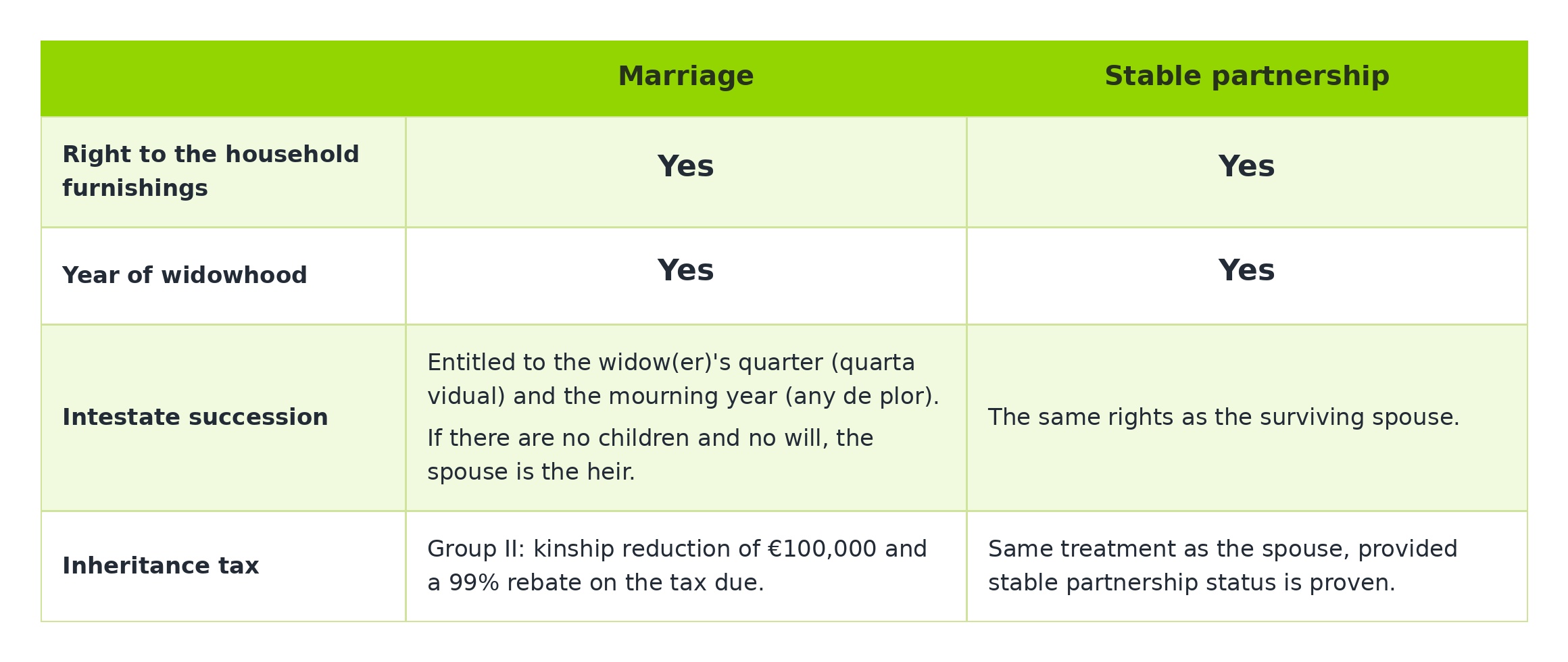
Death: the surviving spouse’s or partner’s rights and succession
Personal income tax (IRPF)
Married couples can file a joint tax return. Stable partners cannot.
Widow’s pension
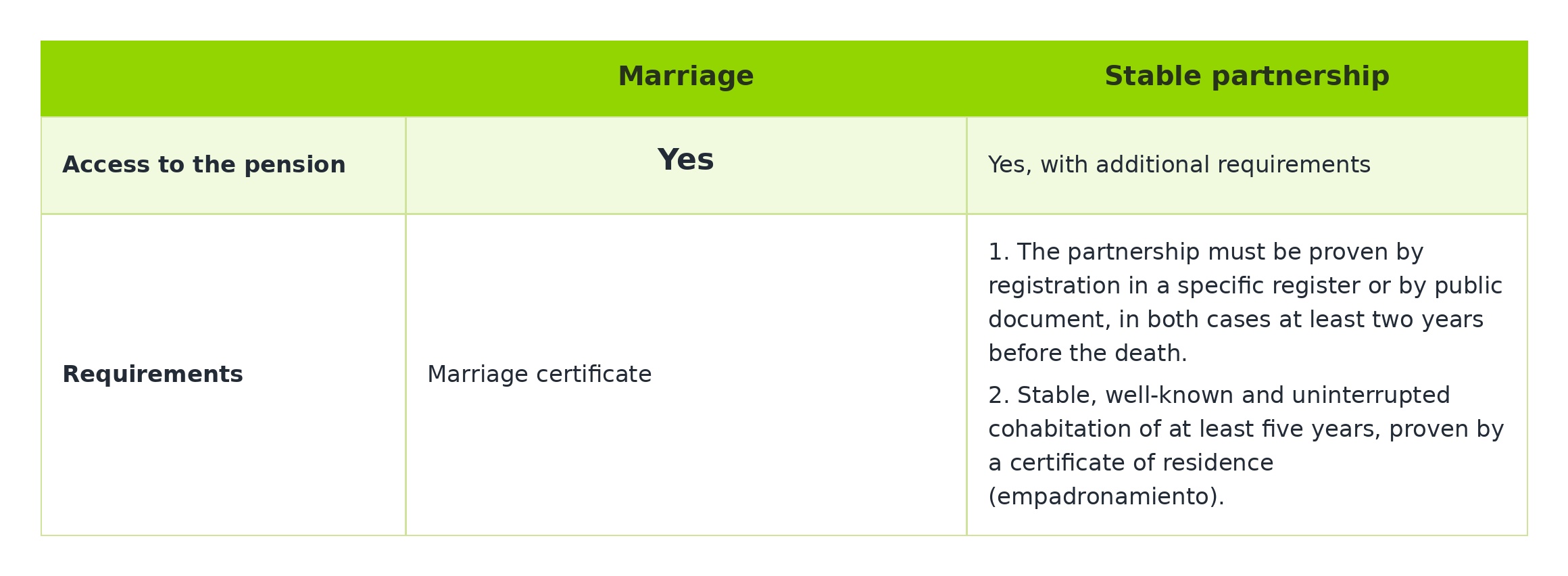
A stable partnership formed only by living together for more than two years (art. 234-1.a of the Civil Code of Catalunya) does not give access to the widow’s pension. A public deed or a registry entry made at least two years before the death is required.
Author:
Cristina Esteruelas
Manager, Civil and Real Estate Department, addwill